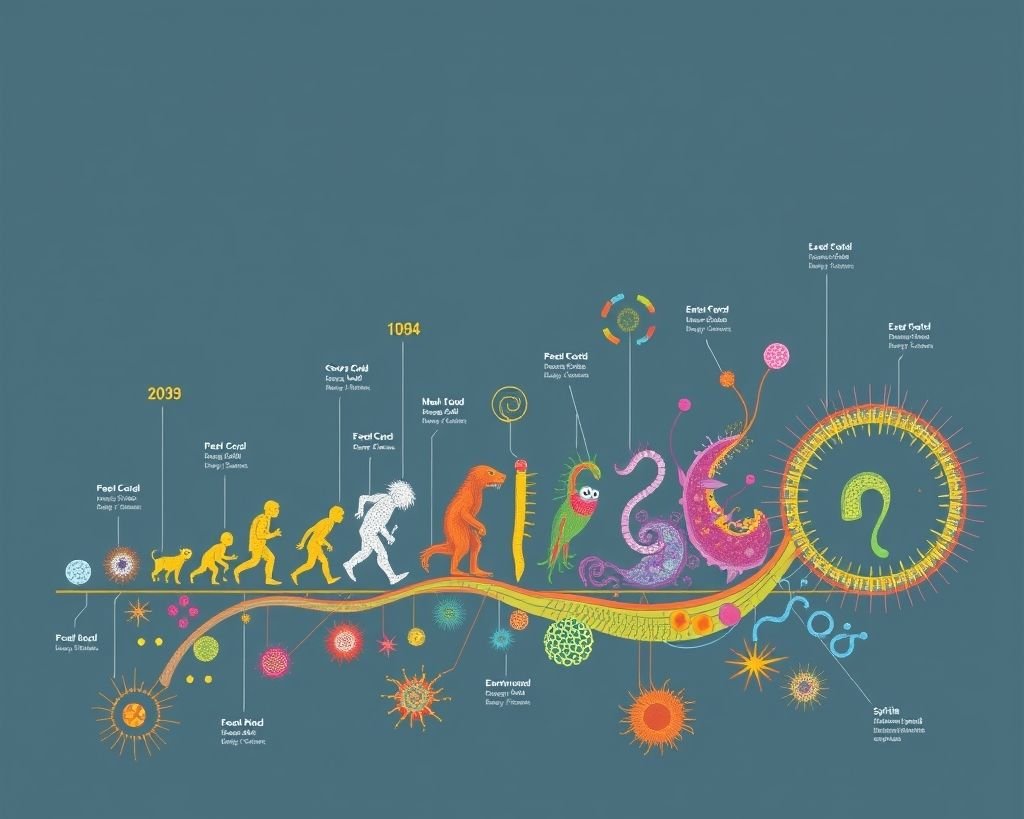
The question of how bacteria evolve offers important insights into the life cycle and adaptability of microorganisms. Bacteria evolve through their ability to rapidly adapt to environmental conditions. This process is shaped by natural selection and genetic changes, allowing them to survive in diverse environments.
The evolution of bacteria is a fascinating topic not just for scientists, but for everyone. Problems we encounter in our daily lives, such as infections and antibiotic resistance, are the results of bacterial evolution. Therefore, understanding how bacteria evolve is critical to developing better solutions in health and science. Let’s take a closer look at this fascinating world!
An Overview of the Evolutionary Process of Bacteria
The evolutionary process of bacteria is shaped by the adaptation and change of microorganisms . Genetic diversity plays a crucial role in this process. Bacteria increase their chances of survival by modifying their genetic material in response to various environmental conditions. The evolutionary process helps us understand how bacteria evolve in different environments, which in turn allows us to discover their survival strategies .
Natural Selection and Bacterial Evolution
Natural selection is a critical mechanism in bacterial evolution. During this process, bacteria evolve by:
- Mutations: Random changes in the DNA of bacteria can lead to the emergence of new traits.
- Adaptation: Bacteria increase their chances of survival by adapting to environmental changes.
- Antibiotic resistance: Some bacteria can develop resistance to antibiotics, making these drugs ineffective.
- Rapid reproduction: The rapid reproduction ability of bacteria allows evolutionary changes to occur more quickly.
What is the Role of Genetic Changes?
Bacteria evolve through genetic changes . These changes increase their chances of survival and help them adapt to new environmental conditions. Mutations and gene transfer are among the primary ways genetic changes occur. Through these processes, bacteria can improve their characteristics and acquire resistance to antibiotics . Below is a table showing the effects of genetic changes on bacteria:
| Type of Genetic Change | Explanation |
|---|---|
| Mutation | They are random changes in DNA. |
| Gene Transfer | It is the transfer of genes from one bacterium to another. |
Antibiotic Resistance and Its Evolutionary Impact
Antibiotic resistance is a defense mechanism developed by bacteria against antibiotics . This resistance plays a crucial role in their struggle to survive . In evolution, this resistance typically arises through natural selection. Bacteria can acquire antibiotic resistance through the following pathways:
- Acquiring new resistance genes through mutations
- Acquiring resistance genes from other bacteria
- Adaptation to environmental factors
Clues About Bacterial Evolution
Bacteria can respond to environmental changes through their ability to rapidly adapt throughout evolution. This increases their chances of survival and reproduction. The development of resistance to antibiotics, in particular, is one of the most prominent examples of this evolutionary process.
Bacterial genetic diversity increases through mutations and gene transfer. These processes allow new traits to emerge and allow bacteria to adapt to more challenging environments. Therefore, understanding bacterial evolution is an important topic in the field of health.
Conducting experiments in the laboratory to observe bacterial evolution helps scientists understand how these organisms change. Such studies contribute to the development of strategies to prevent antibiotic resistance.
Tip 1: Genetic Diversity
Bacteria evolve by gaining genetic diversity through mutations and gene transfer.
Tip 2: Antibiotic Resistance
Bacteria developing resistance to antibiotics are one of the most striking examples of evolutionary processes.
Tip 3: Lab Experiments
Experiments conducted in laboratory settings to understand the evolution of bacteria provide important information in the field of health.
- Bacteria
- They are single-celled microorganisms and can survive in many environments.
- Evolution
- It is the process by which living things undergo genetic changes over time to form new species.
- Natural Selection
- The survival and reproduction of individuals best adapted to environmental conditions.
The question of how bacteria evolve is critical to understanding the adaptability of microorganisms and how they respond to environmental changes.
| Subject | Explanation | Importance |
|---|---|---|
| Bacterial Types | Types and characteristics of different bacteria. | Diversity is essential to understanding evolutionary processes. |
| Natural Selection | Survival of individuals best adapted to environmental factors. | It is a fundamental mechanism in the evolution of species. |
| Genetic Change | Mutations occurring in the DNA of bacteria. | It leads to the acquisition of new features. |
| Antibiotic Resistance | Resistance developed by bacteria to antibiotics. | It creates a major problem in the field of health. |
| Evolutionary Speed | The ability of bacteria to undergo rapid evolution. | Provides the ability to respond quickly to environmental changes. |
| Laboratory Research | Experiments to study bacterial evolution. | It deepens scientific understanding and develops new treatment methods. |
Did You Know? Thanks to their evolutionary processes, bacteria can rapidly adapt to environmental changes. Understanding how bacteria evolve is critical to understanding the genetic changes and natural selection mechanisms of these microorganisms.
*Issues such as antibiotic resistance are the results of the evolutionary abilities of bacteria.*
Bacteria evolve thanks to their ability to rapidly adapt to environmental changes. Natural selection and genetic change lead to the emergence of new traits in these microorganisms. For example, antibiotic resistance is a consequence of bacterial evolution, creating significant health challenges.
Final Thoughts
Bacteria, thanks to their evolutionary processes, have the ability to rapidly adapt to environmental changes. The question of how bacteria evolve is critical for both scientific research and important health issues like antibiotic resistance. Understanding more about bacterial evolution is essential to prevent future health problems.
How do bacteria evolve?
Bacteria evolve through the processes of genetic change and natural selection to adapt to environmental conditions.
What role does antibiotic resistance play in the evolution of bacteria?
Antibiotic resistance increases the ability of bacteria to survive the evolutionary process, and this can create serious health problems.
Why is the evolution of bacteria important?
The evolution of bacteria is critical to the treatment and prevention of disease, as these processes aid in the development of new therapeutic methods.