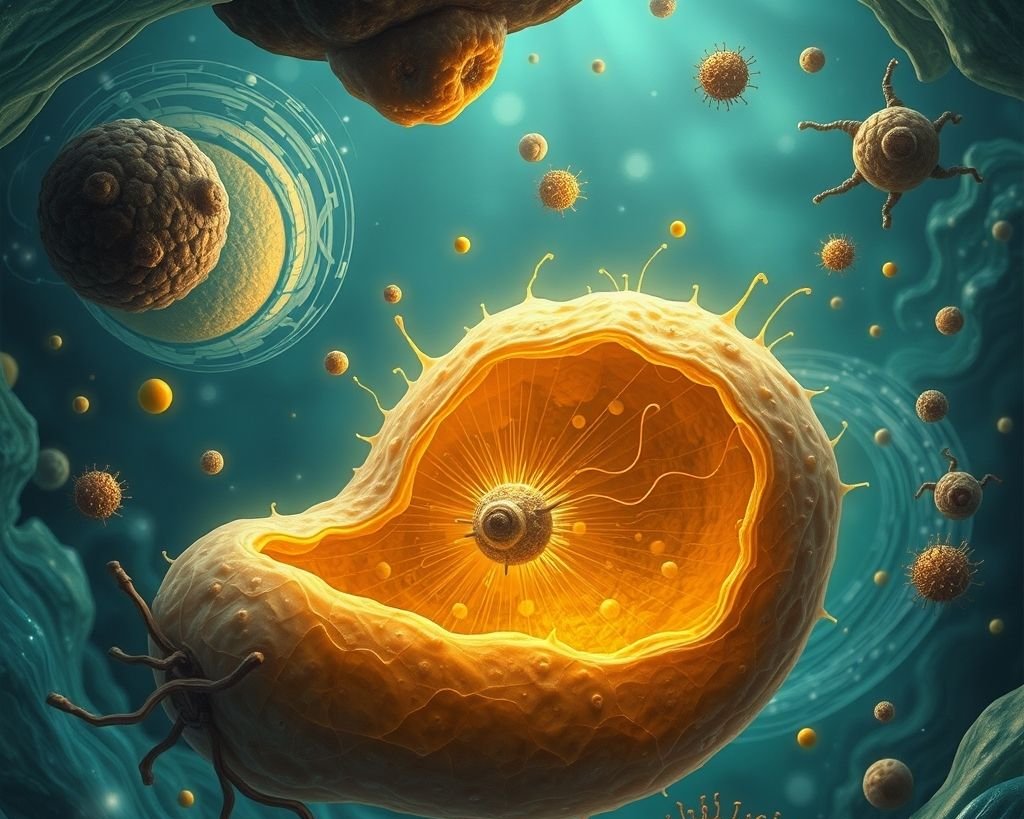
The theory of endosymbiosis offers important insights into the evolution of cells and the origin of mitochondria. It proposes that certain organelles, particularly mitochondria, formed through the incorporation of once-independent bacteria into cells. This process revolutionized cell energy production, paving the way for the emergence of complex life forms.
This fascinating topic is quite exciting for those interested in learning more about biology and evolutionary processes. The theory of endosymbiosis helps us understand not only the origin of mitochondria but also how all cellular life evolved. If you’re interested in learning more about this theory and discovering its impact on the scientific world, keep reading!
Basic Principles of Endosymbiosis Theory
The theory of endosymbiosis is a key concept in cellular evolution. According to this theory, certain organelles, particularly mitochondria , were formed by the incorporation of previously independent prokaryotic organisms into cells. This process revolutionized cellular energy production and accelerated the evolution of multicellular organisms. The fundamental principles of endosymbiosis contribute to the understanding of such symbiotic relationships and energy conversion processes. This theory holds a significant place in many areas of biology and is still being researched today.
Mitochondria and Cellular Energy Production
Mitochondria are organelles that play a critical role in cellular energy production. They play a key role in the production of ATP (adenosine triphosphate). Mitochondria participate in energy conversion processes within the cell, increasing metabolic efficiency. The primary functions of mitochondria in energy production are listed below:
- Oxidative phosphorylation process
- Energy storage and release mechanisms
- Ensuring intracellular calcium balance
- Management of reactive oxygen species
What is the Evolutionary Significance of Endosymbiosis?
Endosymbiosis plays a significant role in evolution. This theory proposes that certain cellular organelles, particularly mitochondria , were formed by the incorporation of bacteria that had lived as independent organisms. This increased the efficiency of cells in energy production , thus supporting the evolution of multicellular organisms. Below is a table containing key elements demonstrating the evolutionary importance of endosymbiosis:
| Feature | Importance |
|---|---|
| Energy Efficiency | It allows cells to produce more energy. |
| Diversity | It supports the evolution of new species and complex life forms. |
| Intracellular Functionality | It enables the functions within the cell to be carried out more effectively. |
Historical Development of Mitochondria
The history of mitochondria is directly related to the theory of endosymbiosis. These organelles emerged approximately 1.5 billion years ago when aerobic bacteria were taken into cells and evolved. The development of mitochondria enhanced organisms’ ability to survive by altering cellular respiration processes . The steps in the historical development of mitochondria are listed below:
- Presence of independent aerobic bacteria
- Intake of bacteria into cells
- Evolution and function of mitochondria
- Emergence of multicellular organisms
Expert Advice
The theory of endosymbiosis provides an important framework for understanding the origin of mitochondria. This theory posits that mitochondria were once independent prokaryotic organisms that were eventually incorporated into cells. This process revolutionized cellular energy production, accelerating the evolution of multicellular life.
It’s important to remember that mitochondria not only produce energy but also play a role in important processes such as cellular metabolism and apoptosis. Therefore, their function and origin are of great importance to biology and evolutionary processes.
While the theory of endosymbiosis has sparked debate in the scientific community, research into the origin of mitochondria is a cornerstone of evolutionary biology. Keeping up-to-date on this topic will deepen your scientific understanding.
Tip 1: Research the Theory
By examining the theory of endosymbiosis in detail, you can learn more about the evolution of mitochondria.
Tip 2: Learn Mitochondrial Functions
Learning what important functions mitochondria have beyond energy production deepens your understanding of cellular processes.
Tip 3: Follow Current Research
Keeping up with new research on the origin of mitochondria enriches your scientific perspective.
- Endosymbiosis Theory
- One theory of cell evolution suggests that some organelles arose from independent bacteria.
- This theory states that mitochondria and chloroplasts are formed by the cellular fusion of once-independent organisms.
- The theory of endosymbiosis plays an important role in the emergence of complex life forms.
- Mitochondria
- They are organelles responsible for the energy production of cells and synthesize ATP molecules.
- Mitochondria evolved from once-independent bacteria, within the framework of the theory of endosymbiosis.
- These organelles are critical to cellular respiration processes.
- Origin
- The starting point or history of something is an important concept in evolutionary processes.
- The origin of mitochondria is explained by the theory of endosymbiosis and plays a critical role in the evolution of cells.
- Origin studies help understand biodiversity.
The theory of endosymbiosis and the origin of mitochondria plays a critical role in the evolution of cellular life, helping us understand the emergence of complex organisms.
| Subject | Explanation | Importance |
|---|---|---|
| Endosymbiosis Theory | A theory about the evolution of cells. | Explains how cells develop into complex structures. |
| Mitochondria | The energy producing organelle of cells. | It plays a critical role in ATP synthesis. |
| Origin | The starting point or date of something. | It helps us understand the evolutionary processes of cells. |
| Cellular Respiration | Energy production process. | It is important for understanding the function of mitochondria. |
| Phased Processes | Developmental stages of cells. | It is linked to the theory of endosymbiosis. |
| Scientific Research | Studies conducted to support the theory. | Provides important findings in the field of cell biology. |
FYI! The theory of endosymbiosis explains the origin of mitochondria, providing crucial insights into cellular evolution. Mitochondria play a critical role in energy production, contributing to the emergence of complex life forms.
*This theory is of great importance in our understanding of biological diversity and the discovery of the development of cellular life.*
The theory of endosymbiosis is a concept related to cell evolution. This theory proposes that mitochondria originated through the incorporation of free-living bacteria into cells. Mitochondria play a critical role in cell energy production and have important functions in ATP synthesis. This theory is of great importance in the evolution of complex organisms and helps us understand the development of cellular life.
Final Thoughts
The theory of endosymbiosis is a key concept that helps us understand the origin of mitochondria. This theory provides profound insights into the evolution of cellular life and the formation of complex organisms. Scientific research and discoveries support this theory and contribute to our understanding of biological diversity. Understanding the theory of endosymbiosis is critical to both cell biology and evolutionary processes.
What is the theory of endosymbiosis?
The theory of endosymbiosis is a concept related to the evolution of cells that proposes that some organelles, notably mitochondria, derived from independent bacteria.
Why is the origin of mitochondria important?
The origin of mitochondria plays a critical role in cellular energy production and has an important place in the evolution of complex life forms.
What scientific findings support the endosymbiosis theory?
The theory of endosymbiosis is supported by scientific research, such as genetic analyses and the fossil record, which helps us understand the evolution of cellular life.