The human evolutionary process is critical to understanding the emergence of Homo sapiens. This process is the culmination of millions of years of evolutionary change and reveals how humans develop and interact with their environment. The evolutionary process encompasses not only physical changes but also human social and cultural development.
In this article, we’ll explore the different stages of human evolution and examine how the path to Homo sapiens was shaped. Recent discoveries in evolutionary biology and archaeology are rewriting human history. So, what happened along the way? Join us on this journey to unlock the secrets of the past and learn more about humanity’s origins!
The First Human Species and Evolutionary History
The first human species emerged in diverse locations throughout evolutionary history . Early hominid species such as Australopithecus are considered human ancestors and offer important clues about human evolution . Fossil remains of these species help us understand how humans developed and adapted to their environment. Human adaptations during this process are part of the struggle for survival and played a critical role in the evolutionary process.
Characteristics and Development of Homo Sapiens
Homo sapiens is the last known evolutionary stage of modern humans. Characteristics of this species include advanced brain capacity, complex language abilities, and social interaction skills. Furthermore, innovations such as agriculture and animal husbandry played a major role in shaping human societies during its development . Among the strategies Homo sapiens developed for survival during this period were:
- Social cooperation
- Development of communication skills
- The ability to make new tools
- Adaptation to environmental changes
Environmental Factors in Human Evolution
Environmental factors have played a critical role in the processes of natural selection and adaptation in human evolution . Different climatic conditions, food sources, and habitats are important factors shaping the evolutionary development of Homo sapiens. For example, societies living in warm climates have developed different traits to regulate their body temperature. In this context, environmental factors help us understand how human physical and behavioral traits have changed over evolution. Below is a table showing some of the environmental factors that have influenced human evolution:
| Environmental Factors | Effect |
|---|---|
| Climate Changes | Change of living spaces |
| Food Sources | Evolution of eating habits |
| Social Structures | Development of societies |
Social Structure and Culture of Homo Sapiens
The social structure and culture of Homo sapiens are one of the most important elements of human evolution. Humans have developed complex social structures through social interaction and cooperation . This structure encompasses many elements, such as the development of language, the emergence of art, and the formation of belief systems. Some of the key factors that influenced the social structure of Homo sapiens are listed below:
- Communication skills
- Shared values and norms
- Social roles
- Cultural heritage and traditions
- Economic cooperation
Information About the Evolutionary Processs
Human evolution is a crucial process in the journey to Homo sapiens. A deep understanding of how humans evolved with the adaptations and environmental changes of their ancestors, primates, is critical to understanding evolutionary biology.
The discovery of different hominid species illuminates human evolutionary history. Examining the characteristics of these species and the periods in which they lived helps us better understand the evolutionary journey of Homo sapiens.
Throughout evolution, DNA analysis and fossil findings provide crucial information about human origins. This data contributes to our understanding of how humans developed and their relationships with other species.
Tip 1: Research Hominid Species
Studying different hominid species is critical to understanding the stages of human evolution.
Tip 2: Be Careful with DNA Analysis
DNA analysis is an important tool for understanding the evolutionary history and genetic relationships of humans.
Tip 3: Follow the Fossil Finds
Fossil findings illuminate important turning points in the evolutionary process and human development.
- The Evolutionary Process of Humanity
- It is a biological and anthropological process that studies the origins and evolution of humans.
- Homo Sapiens
- Homo sapiens, the modern human species, is known for its ability to reason and think complexly.
- Evolution
- It is a scientific concept that explains how living things develop and diversify through genetic changes over time.
The human evolutionary process: The path to Homo sapiens is critical to understanding human origins and development. Evolution is a journey that has shaped human history.
| Stage | Explanation | Importance |
|---|---|---|
| Early Human Species | Emergence of species such as Homo habilis and Homo erectus. | It forms the cornerstones of human evolution. |
| Hunting and Gathering | Nutrition and survival strategies of early humans. | It contributes to the development of social structure and cooperation. |
| Use of Fire | Control of fire for heating, cooking and defense. | It has increased the quality of life of people and accelerated social development. |
| Agricultural Revolution | Transition to settled life with the beginning of agriculture. | It laid the groundwork for the development of societies and the establishment of cities. |
| Cultural Development | The evolution of elements such as art, language and religion. | It strengthens people's social identities and social bonds. |
| Modern Homo Sapiens | Physical and mental characteristics of today's people. | It represents the final point of man's evolutionary journey. |
A Fact: The human evolutionary process is critical to understanding the origins of Homo sapiens. Early human species , such as hunters and gatherers , shaped human social and cultural development. This process encompasses significant turning points in human history.
*Evolutionary biology is an indispensable branch of science for understanding the human past and future.*
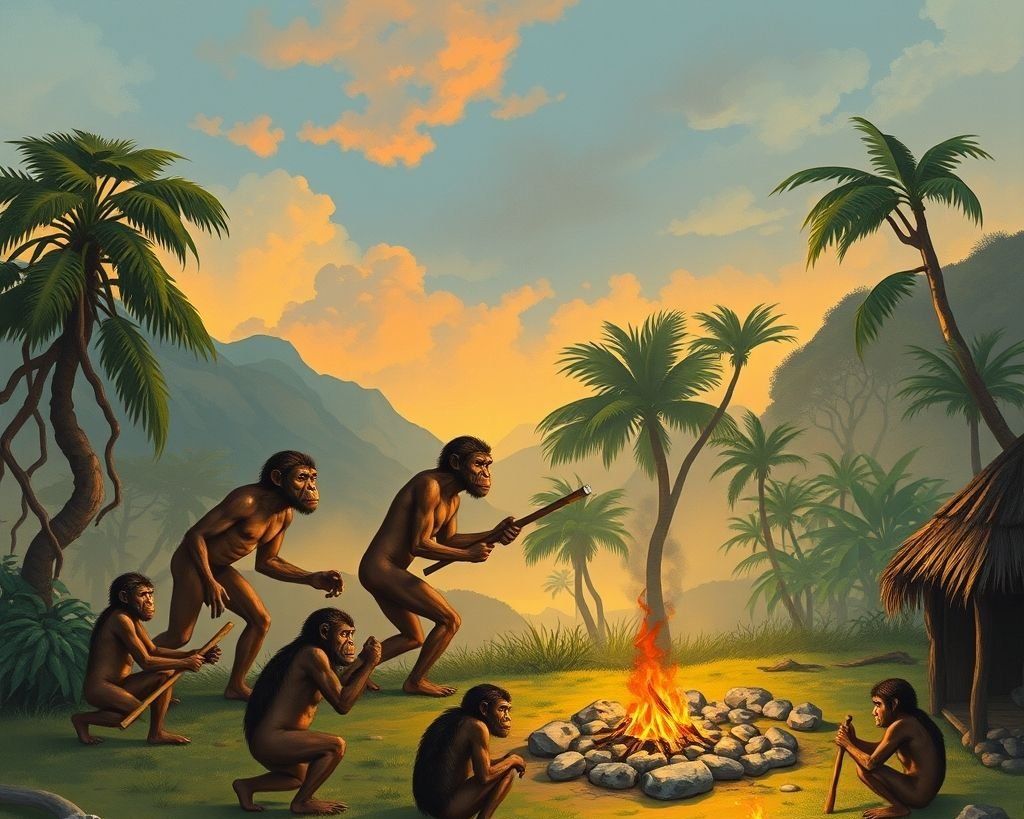
The human evolutionary process is critical to understanding the origins and development of Homo sapiens. This process began with the emergence of the first human species , Homo habilis and Homo erectus. Hunting and gathering were among human survival strategies, while the use of fire enhanced quality of life.
The agricultural revolution, along with the transition to settled life, accelerated social development and enabled the evolution of cultural elements. Finally, modern Homo sapiens represents the physical and mental characteristics of modern humans. This journey encompasses significant turning points in human history.
Final Thoughts
The human evolutionary process is vital to understanding the origins and development of Homo sapiens. This journey encompasses significant turning points and cultural developments in human history. Studies in evolutionary biology and anthropology not only allow us to understand the human past but can also shape our future development. Therefore, delving deeper into human evolution is of great scientific and societal importance.
What is the evolutionary process of human beings?
The human evolutionary process is a biological and anthropological process that examines the origins and development of Homo sapiens. This process encompasses the changes humans have undergone throughout history.
What are the characteristics of Homo sapiens?
Homo sapiens is known for its advanced intelligence, complex thinking, and social interaction skills. It also played a significant role in the development of language and cultural elements.
What is the importance of evolutionary biology?
Evolutionary biology is a critical field for understanding human history and evolutionary processes. It provides in-depth insights into humanity’s origins and future.